EN
EN




Description
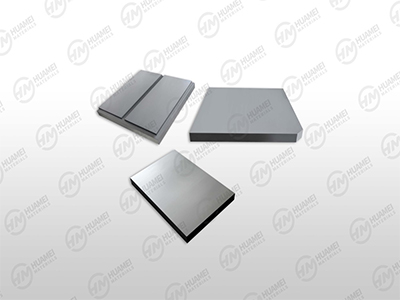
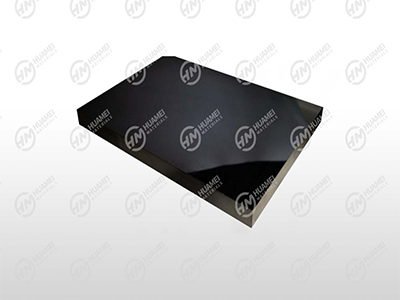
KCE® reaction sintering or pressureless sintering silicon carbide heating plates are formed by isostatic pressing and high-temperature sintering. Customized processing can be carried out according to user design drawings.
Specifications
KCE® SiSiC/RBSiC/SSiC Technical Data Sheet
| Technical Parameters | Unit | SiSiC/RBSiC Value | SSiC Value |
| Silicon Carbide content | % | 85 | 99 |
| Free Silicon content | % | 15 | 0 |
| Bulk Density 20°C | g/cm³ | ≥3.02 | ≥3.10 |
| Open Porosity | Vol % | 0 | 0 |
| Hardness HK | kg/mm² | 2600 | 2800 |
| Flexural Strength 20°C | MPa | 250 | 380 |
| Flexural Strength 1200°C | MPa | 280 | 400 |
| 20 – 1000°C (Coefficient of Thermal Expansion) | 10–6 K–1 | 4.5 | 4.1 |
| Thermal Conductivity 1000°C | W/m.K | 45 | 74 |
| Static 20°C(Modulus of Elasticity ) | GPa | 330 | 420 |
| Working temperature | °C | 1300 | 1600 |
| Max. Service Temp (air) | °C | 1380 | 1680 |
Applications
KCE® RBSiC/SiSiC/SSiC Silicon carbide heating plates can be used for producing glass substrates; used for 3D glass hot bending forming machine for mobile phones and tablet displays; used for 3D glass thermoforming machine for automotive final control display screens; used for non spherical glass molding hot forming machines (molding machines).
Advantages
The superior high-temperature properties of KCE® RBSiC/SiSiC/SSiC Silicon carbide heating plates have the advantages , such as High thermal conductivity, good temperature uniformity, fast heat transfer and dissipation, and fast thermal response speed (heating and cooling speed); High temperature without deformation, good flatness; Good wear resistance and will not produce dust pollutants; Good high-temperature oxidation resistance etc. which make it an ideal material for heat-resistant components in electronic glass forming processes.