EN
EN




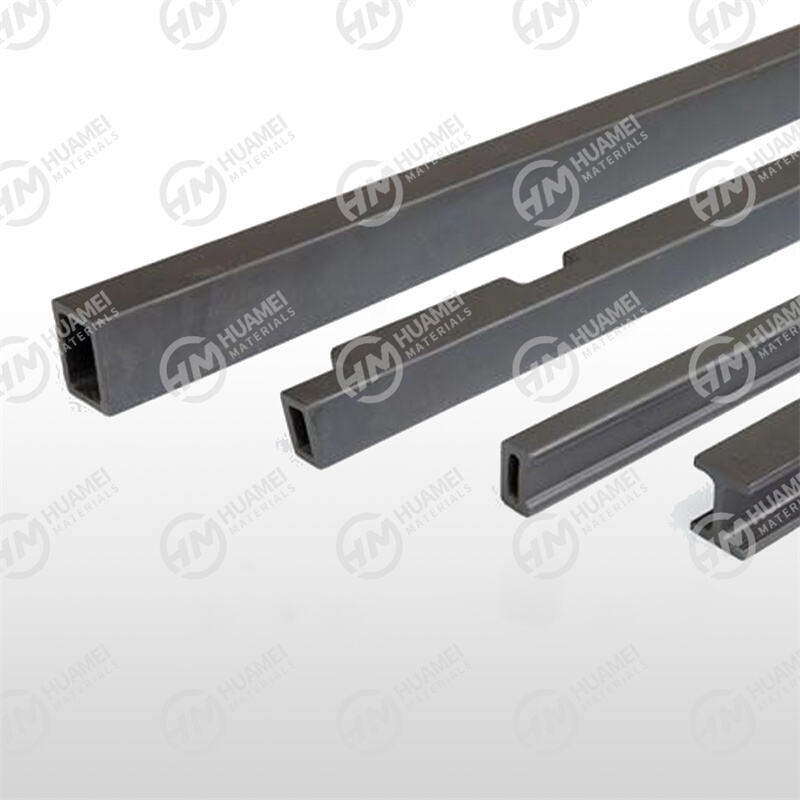
Specifications
KCE® SiSiC/RBSiC Technical Data Sheet
| Technical Parameters | Unit | Value |
| Silicon Carbide content | % | 85 |
| Free Silicon content | % | 15 |
| Bulk Density 20°C | g/cm³ | ≥3.02 |
| Open Porosity | Vol % | 0 |
| Hardness HK | kg/mm² | 2600 |
| Flexural Strength 20°C | MPa | 250 |
| Flexural Strength 1200°C | MPa | 280 |
| 20 – 1000°C (Coefficient of Thermal Expansion) | 10–6 K–1 | 4.5 |
| Thermal Conductivity 1000°C | W/m.K | 45 |
| Static 20°C(Modulus of Elasticity ) | GPa | 330 |
| Working temperature | °C | 1300 |
| Max. Service Temp (air) | °C | 1380 |
Applications
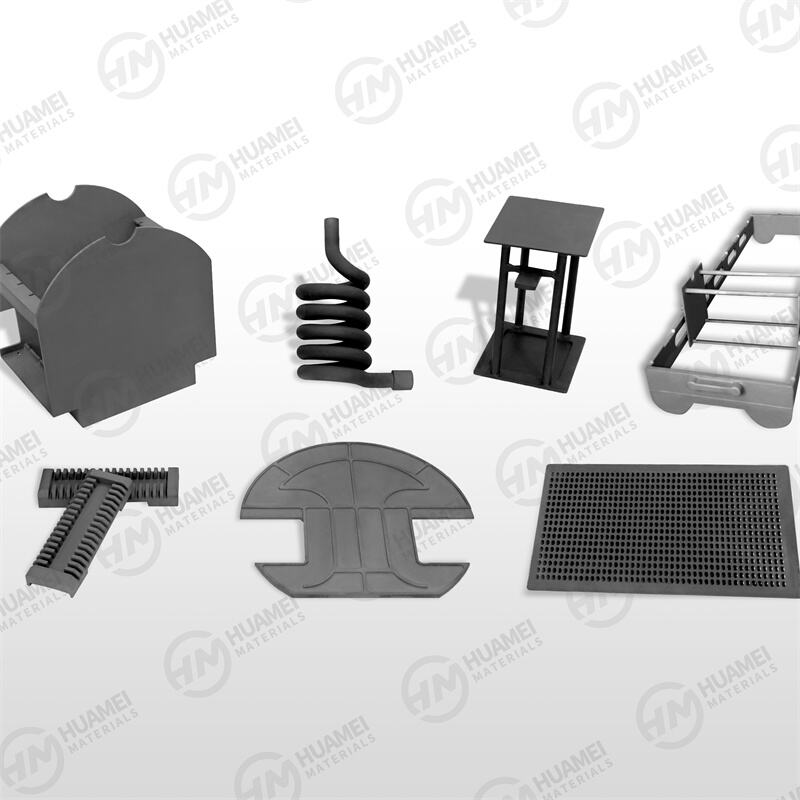
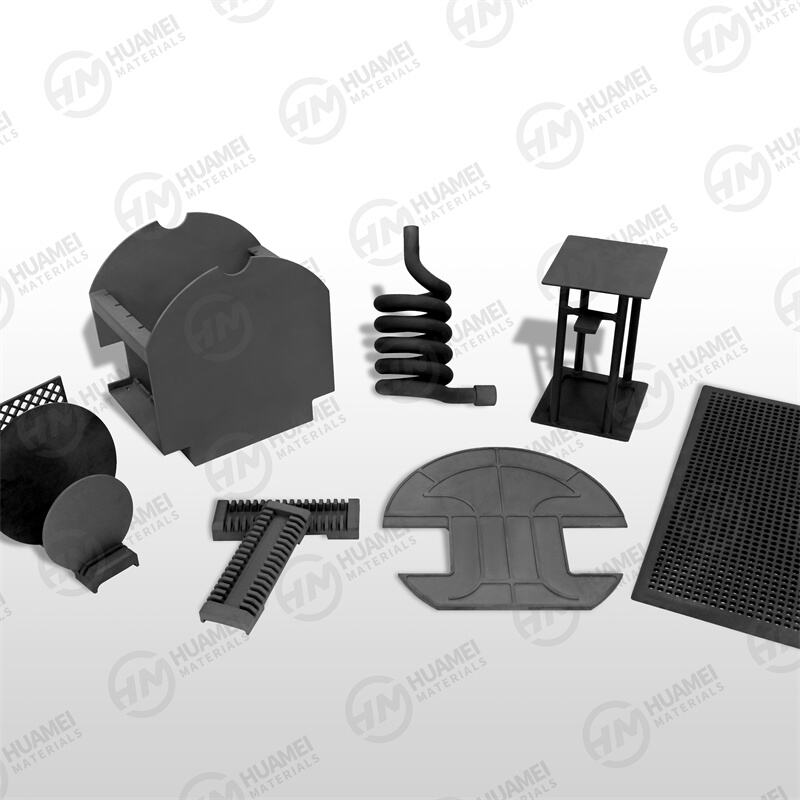
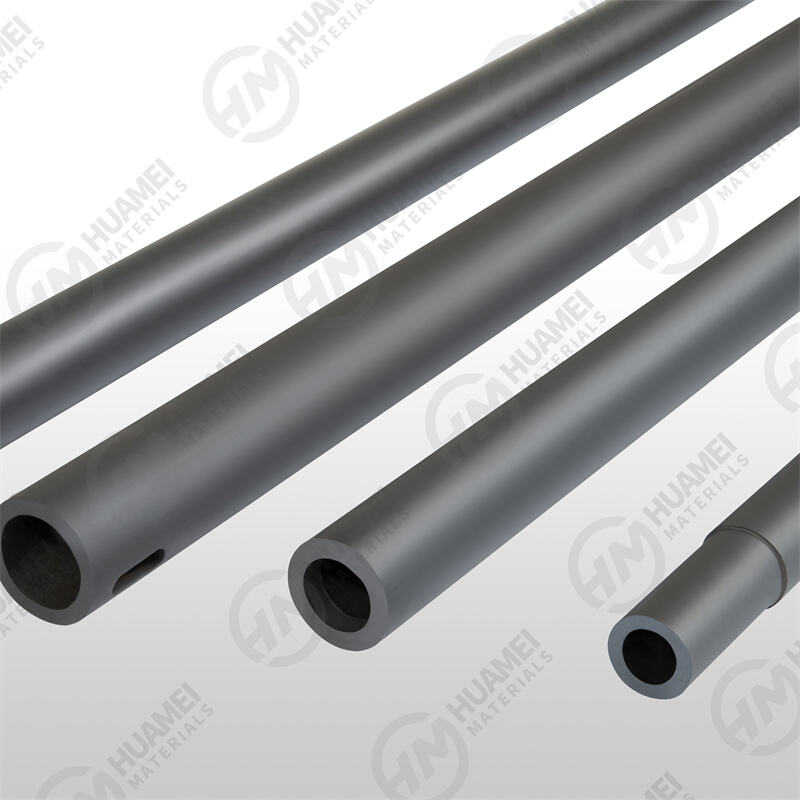
In the field of new energy photovoltaics, silicon carbide ceramic materials are gradually becoming a key carrier in the manufacturing process of solar cells, such as boat carriers, boat boxes, and pipe fittings, and their market demand continues to rise. In the new energy industry of photovoltaics and electronics, silicon carbide kiln furniture is used as a transmission component for diffusion furnaces and sintering furnaces to ensure stable material properties at high temperatures. In the field of new energy vehicles, silicon carbide ceramic kiln furniture is applied in the sintering and heat treatment processes of positive and negative electrode materials and electrolytes for lithium-ion batteries, which improves kiln production capacity and reduces energy consumption.
Advantages
Silicon carbide ceramic kiln furniture is mainly used in high-temperature industrial scenarios. With its characteristics of high temperature resistance, corrosion resistance, and good thermal conductivity, it plays a key role in the fields of new energy photovoltaics and new energy vehicles.